


Pay negotiations are a vital but uncomfortable part of growing up in a career path. For many professionals, saying something feels risky – like they will be seen as demanding, rude, or ungrateful. Know that salary negotiations are a natural part of being employed, whether you are starting at a new company or simply going after a higher salary for your existing job. Knowing how to navigate this will help you get paid your worth and keep a good relationship.
This guide takes you through the whole salary negotiation process – when to ask, How to Negotiate Salary communicate it, real examples, and how to follow up – so you can hold the conversation with confidence and clarity.
Why Salary Negotiation is So Important for Your Career
And compensation is not merely about a monthly paycheck. This is indicative of the esteem attached to your expertise, experience, and contribution to any organisation. Professionals who avoid talking about pay are often leaving money on the table for years to come. And, of course, future raises, bonuses, and even retirement benefits are often based on where you start.
Negotiating proves you know your worth, you are generous, but you also don′t overestimate yourself. Employers usually expect candidates to make inquiries and demand clarity about compensation and benefits. How to Negotiate Salary – when done properly – empowers your position, not weakens it.
How to Negotiate Salary: Preparing Before the Conversation
Preparation is the basis of any successful negotiation. Going into a conversation without having done any groundwork first can undermine your argument.
Research market pay with reputable salary sites and industry reports. Salary data is compared based on specific job title, location, experience level, and industry. This means you can create a reasonable and justifiable range.
Next, assess your value. Use bullet points to communicate quantifiable accomplishments like revenue increase, cost reduction, process improvements, leadership initiatives, or project successes. These points give some context to your expectations.
Find your least-acceptable offer too. When a counteroffer comes in, this is good because you know your bottom line and can agree or disagree calmly.
Interview: How to Negotiate Salary Tips
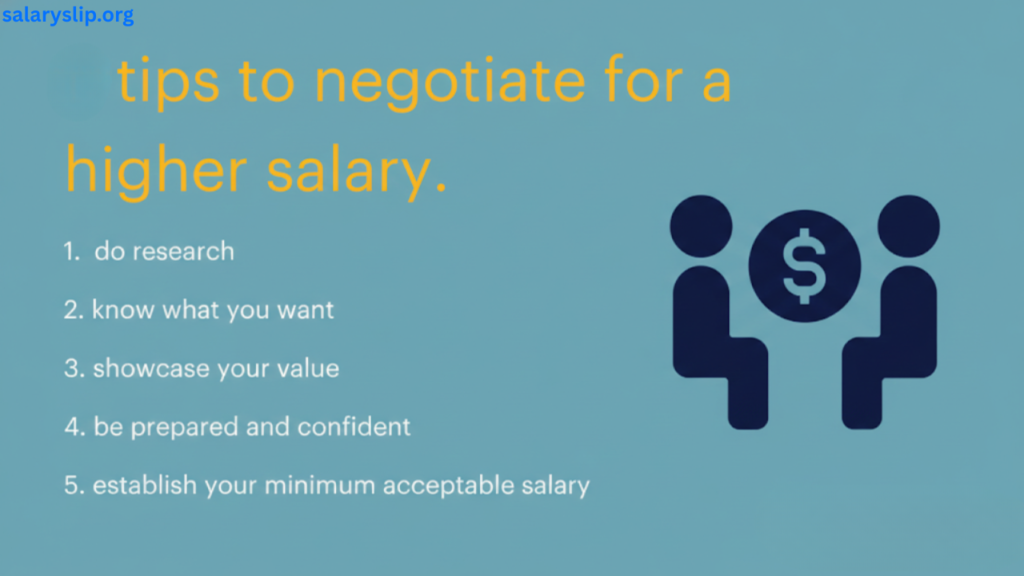
There are strategic methods of approaching salary discussions during interviews that are best used for consumers applying for a job with the help of a resume writing service or for those who are trying to seek a to Negotiate Salary through a step-by-step process via templates. Early stages of the interview process should still be focused on skills, experience, and cultural fit. In the event that salary expectations arise, provide a researched range instead of an exact figure.
In-depth compensation conversations should happen later in the process, whether in the latter stages of interviews or during the final rounds. You already have a better idea of what is expected of you and what you can be responsible for, making your request that much credible.
If you are asked directly, maintain professionalism and confidence in your response. Focus on what the market pays and why you bring value, not your human need for money.
How to Negotiate Salary with HR
Salary Negotiations and HR Experts (Role of HR Professionals). HR discussions should be mutually oriented after all. They want to do this while keeping internal pay structures equitable and managing candidate expectations.
Be clear, polite, and factual. Use market data and experience, not emotion, to convey your expectations. Open-ended questions like, What kind of flexibility do you have on the compensation structure tend to spark good conversations.
How to Negotiate Salary: HR discussion illustration
“I am very excited to join the team and work in this role. There ultimately was a little bit of negotiation on my end, as market research for these positions alongside my experience led me to think that perhaps there was flexibility around the offer. Could we explore that together?”
Read more: Nurse Salary / Air Traffic Controller Salary / 2579xao6 Code Bug
How to Negotiate Salary Email: Professional Example
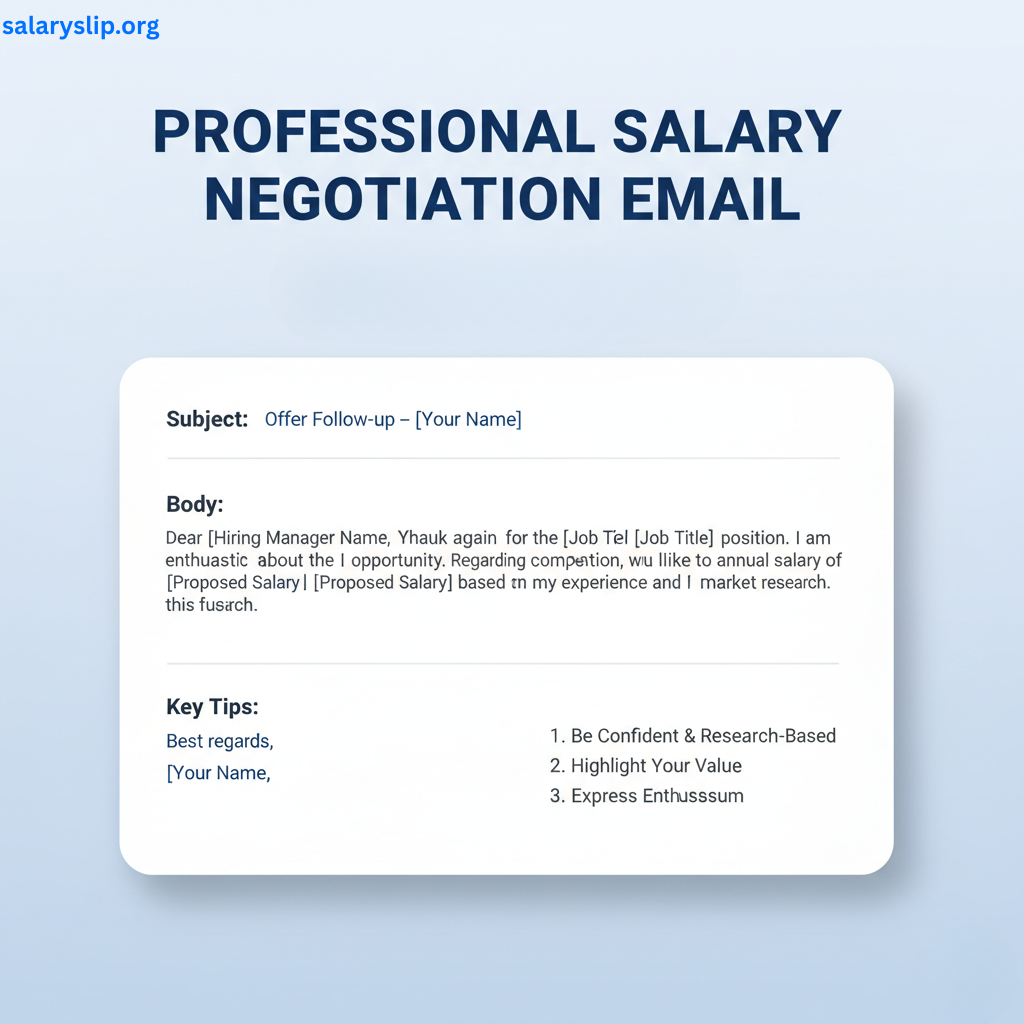
For remote roles or formal offer discussions, we often negotiate over email. A proper email maintains precision and decorum.
- How to Negotiate Salary template
- Express appreciation for the offer
- Reconfirm interest in the role
- Present your researched request
Frame your comments in such a way as to promote discussion, as opposed to demanding one or another change
Example structure:
Acknowledge the employer, provide a one-sentence justification, suggest a number or range you have in mind, and ask if there is some wiggle room.
This tactic is professional and keeps you in dialogue.
How to Negotiate Salary Increase in Your Current Job
It will take good timing and proof that you deserve a pay raise to negotiate a pay raise in your current position with your organisation. These should be specific instances when you can show your work - after completing a key project, getting strong feedback, or taking on more work.
Keep records that demonstrate how your role has changed and how your work aligns with business objectives. Don’t compare yourself with someone else. Working on yourself and aligning your pay with the market
Long-term commitment and growth potential provide the basis of a strong case for compensation when talking internally.
How to Negotiate Salary with a Manager
Salary conversations with a direct manager should only be conducted in a respectful and future-oriented manner. Your manager has your back, but they need a good reason to stick their neck out.
Contextualize the conversation in contribution, accountability, and effect on the future rather than grievance. Be grateful for the opportunities given, while also making it clear as to how far you want to go.
When managers view negotiation as a conversation about expansion, not a battle, they react favorably.
How to Negotiate Salary: Common Mistakes to Avoid
Inadvertently, professionals dilute their position to negotiate against. Don’t accept the first offer straight away without consideration. Consider the entire offer, including benefits and career advancement.
Don’t use personal spending as an excuse. Other salary negotiations should be based on what they contribute professionally and the market rate.
Avoid vague language. Using specific numbers, embellished with research, means more than just generalizations. Finally, keep in mind to use a calm and respectful tone – negotiation is a dialogue, not a war.
Reddit Salary Negotiation: The Pros Weigh In
When you read about negotiation on online career communities, it is often rooted in real-world examples. Most professionals who do this prepare the data, have confidence, and then allow the rest to flow.
The same old advice: to negotiate gently always, to never assume an offer is the end of the line, and to keep in mind that a no today is not a no forever. Such experiences across many industries underscore the fact that negotiation is a practiced skill.
How to Negotiate Salary: Responding to Counteroffers
You want something more than that, but an employer might come in lower than that. In these instances, consider the total package. More value may also come in the form of a bonus, a hybrid model, a learning cap, or an earlier performance assessment.
If the offer is still, however, short of what you would accept, then ask for a review of your salary in, say, 6 months based on performance. This keeps the conversation positive and forward-moving.
How to Ask for More Money: After the Conversation
Once negotiations are done, get everything in writing. If you talk about future reviews, say when the changes will apply and what performance criteria will be used.
Keep delivering the goods after your escapade is over. If successful, negotiations can quickly raise expectations, trust, and visibility. Consistent performance puts you in a better position to get a raise or promotion the next time around.
Final thought: How to negotiate salary
Remember, How to Negotiate Salary is not a battle; it is a discussion between you, your employer, and your future. Advocating for yourself does not mean ruining a relationship, but with the self-awareness that you may need to take the time to prepare, breathing and remaining calm, and communication being clear and respectful, this is achievable
Irrespective of whether you can get changes on the spot, negotiation builds confidence and states that you know your worth. In the long run, this mentality is crucial in having a successful career.