


Why Modern Job Applications Need Both Strategy and Technology?
The job market has evolved dramatically over the past decade, and applying for a job today requires more than just submitting a basic resume. Employers receive a large number of applications for each position, which means candidates must find ways to stand out while clearly presenting their qualifications. In this competitive environment, many professionals have started using humanized AI text techniques and modern technology to improve the quality of their applications. Artificial intelligence tools can help structure resumes, refine writing, and analyze job descriptions to match hiring managers’ expectations. However, while automation brings efficiency, applicants should ensure that their applications remain personal and authentic and do not appear as if they were written by a machine.
The rise of AI for job applications has made it easier for candidates to quickly create polished documents. These tools can create CV drafts, suggest improvements and identify keywords that best suit the employer’s needs. Applicants should also remember that technology should support their voice rather than replace it. By learning how to properly humanize AI text, job seekers can transform automated drafts into engaging narratives that highlight their accomplishments and career aspirations. Combining these tools with strategies like resume optimization, using an AI resume builder, and focusing on personalizing cover letters allows candidates to create applications that feel both professional and authentic.
How Artificial Intelligence Is Reshaping the Way People Apply for Jobs
Artificial intelligence has introduced a new level of efficiency in the job application process. In the past, writing CVs and cover letters required hours of brainstorming, editing and formatting. Today, AI for job applications tools can analyze job descriptions and generate structured drafts in minutes. These systems are designed to understand industry language and highlight relevant skills, making it easier for candidates to tailor their applications to what employers are looking for. As a result, job seekers can focus more on refining their message rather than struggling with formatting or phrasing.
Despite these advantages, AI-generated text often requires careful editing to make it sound natural and engaging. Many automated drafts follow predictable sentence structures or overly formal language that can feel impersonal. This is why it is important to humanize AI text before submitting an application. When applicants take the time to adjust the tone, add personal examples and rewrite paragraphs in their own voice, the document becomes far more attractive. Continuously learning to humanize AI text ensures that the technology improves the application rather than generalizing it. This process works best when paired with tools that support resume optimization, advanced AI resume building platforms, and thoughtful personalization of cover letters.
Keeping Your Personal Voice Alive in AI-Assisted Writing
One of the biggest concerns many job seekers have when it comes to the use of artificial intelligence is the possibility of losing their individual voice. Recruiters read hundreds of applications and can often find that a document seems too mechanical or repetitive. Even if a resume is technically perfect, it cannot make a strong impression if it lacks personality and real storytelling. This is where the ability to humanize AI text becomes extremely valuable for candidates who rely on digital tools.
By carefully reviewing the AI-generated draft, applicants can add context about their achievements, experiences and career motivations. These descriptions turn ordinary sentences into meaningful narratives that demonstrate value to potential employers. When candidates consistently humanize AI text, they create applications that reflect both professionalism and personality. In addition, AI for job applications can still help with organization and keyword selection, ensuring the document meets modern recruitment standards. Combined with technologies such as resume optimization, tools that act as AI resume builders, and effective personalization of cover letters, this balanced approach helps applicants communicate their strengths more effectively.
Designing Resumes That Speak to Both Humans and Algorithms
Many companies now use applicant tracking systems to scan resumes before they are reviewed by a recruiter. These systems look for relevant keywords, skills and formatting patterns that match the job description. As a result, job seekers must create resumes that satisfy both automated systems and human readers. Tools built for AI for job applications are particularly useful in this area because they can analyze job postings and suggest improvements that increase the chances of passing these automated filters.
However, an optimized resume should still sound natural and attractive when a recruiter reads it. This is why applicants should review AI-generated content and adjust the AI text to humanize it where necessary. Adding specific accomplishments, measurable results, and brief descriptions of actual projects can make a significant difference. When job seekers intentionally humanize AI text, they turn algorithm-friendly content into a story about their professional journey. By combining this strategy with resume customization, using an AI resume builder, and thoughtful personalization of the cover letter, you ensure that the final application appeals to both technology and human decision makers.
Transforming Generic Cover Letters Into Personal Career Stories
While resumes highlight skills and experiences, cover letters give candidates the opportunity to explain their motivation and personality. Many applicants have trouble writing cover letters because they are unsure how to convey enthusiasm without becoming repetitive. Fortunately, AI for job applications can produce strong first drafts by analyzing the job description and identifying key skills that should be emphasized. This allows applicants to start with a clear structure rather than facing a blank page.
Even with this help, the most effective cover letters are those that feel personal and genuine. After creating a draft, candidates should carefully revise the AI text to humanize it and add details about why the role excites them. As job seekers constantly humanize AI text, their cover letters become engaging stories instead of simple introductions. Personal anecdotes, career goals and insights about the company can turn the document into a motivating message. Combining these changes with cover letter personalization, resume customization, and the use of an AI resume builder helps ensure that each application feels unique and targeted.
Breaking the “AI Robot Voice” in Professional Writing
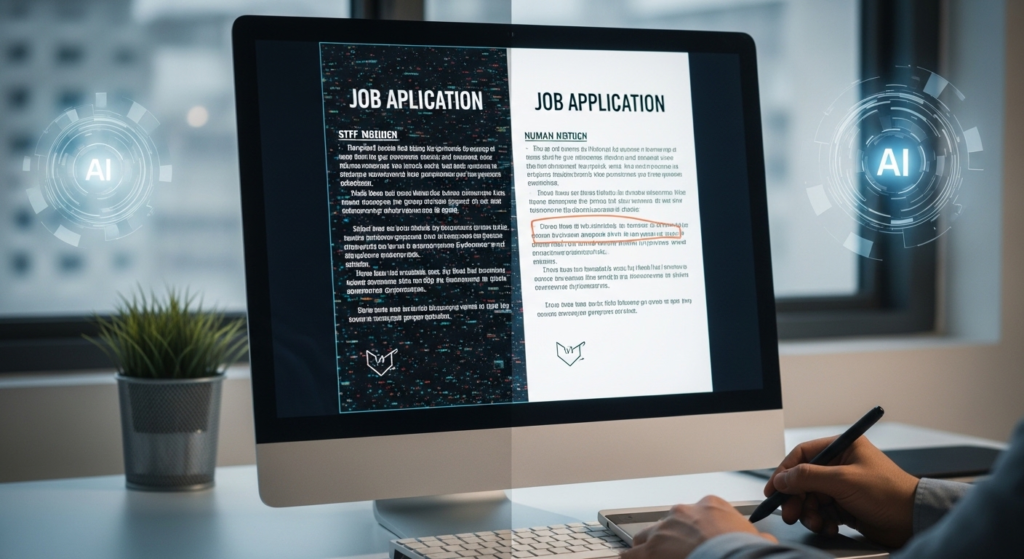
One of the most notable signs of AI-generated content is a tone that feels overly formal or repetitive. Recruiters often find applications filled with similar phrases and general descriptions of responsibilities. This type of writing can make candidates blend into the background rather than stand out. To avoid this problem, applicants must actively edit automated drafts and refine their language to reflect their natural communication style.
The editing and rewriting process helps humanize AI text so that the final document feels authentic and engaging. Candidates can replace general phrases with specific accomplishments, add numbers to highlight measurable success, and adjust sentences to sound more conversational. When professionals take the time to humanize AI text frequently, they transform standard AI-generated content into engaging career narratives. Meanwhile, AI for job applications continues to provide valuable assistance by improving keyword identification and structuring. When combined with resume optimization, tools like an AI resume builder, and thoughtful personalization of cover letters, the end result is both strategic and distinctive.
Turning AI Efficiency Into a Creative Career Advantage
Artificial intelligence is a remarkable efficiency for those who need to apply for many positions. Instead of writing each document from scratch, candidates can use AI for job applications to generate structured drafts tailored for different roles. This saves time and allows professionals to focus more on researching companies and preparing for interviews. The ability to quickly create high-quality applications gives candidates a distinct advantage in fast-moving job markets.
But speed alone does not guarantee success. Applicants should also focus on creativity and originality to attract the attention of hiring managers. After preparing a draft, it is necessary to revise the content and humanize the AI text so that it reflects real experiences and career goals. When candidates consistently humanize AI text, their applications become memorable instead of predictable. By combining this process with resume optimization, advanced AI resume builder tools, and thoughtful personalization of cover letters, job seekers can turn technical skills into a powerful career advantage.
Using Smart Data Insights to Match Employer Expectations
Another benefit of AI for job applications is the ability to analyze hiring trends and employer preferences. Many AI platforms study thousands of successful CVs and identify patterns in language, formatting and keywords that appeal to recruiters. This insight allows job seekers to tailor their applications to industry standards and increase their chances of being noticed during the screening process.
Even with these data-driven recommendations, the final document should always reflect the applicant’s personality and achievements. That’s why it’s important to edit AI-generated drafts and humanize AI text before sending them. Adapting the language and adding examples from real experiences can greatly improve the impact of an application. As candidates repeatedly humanize AI text, they strike a balance between algorithm-friendly formatting and authentic storytelling. Tools that support resume customization, an efficient AI resume builder, and strategic personalization of cover letters further strengthen this approach.
Preparing for the Future of AI-Enhanced Hiring
The effect of artificial intelligence in recruitment is likely to increase in the coming years. Many organizations already rely on digital tools for screening candidates, evaluating CVs and shortlisting applicants. As this trend grows, understanding how to effectively use AI for job applications will become an essential skill for professionals in nearly every industry. Those who learn to utilize these tools effectively will have a significant advantage when competing for opportunities.
At the same time, the human element in communication will remain as important as the technology. Employers ultimately want to hire people who can communicate ideas clearly and bring creativity to their work. This is why the ability to humanize AI text will play an important role in future job applications. Candidates who regularly humanize AI text ensure their documents reflect real passion and personality. When supported by resume optimization, an advanced AI resume building platform, and effective personalization of cover letters, applicants can confidently navigate the evolving recruiting landscape.
Blending Technology and Personality to Build Memorable Apps
The most successful job applications today are those that combine the efficiency of technology with the authenticity of personal storytelling. Artificial intelligence provides valuable assistance by improving structure, identifying relevant keywords and speeding up the writing process. By using AI for job applications, candidates can focus on refining their message and presenting their strengths in a clear and organized way.
However, the final step is always thoughtful editing. By carefully reviewing drafts and making adjustments that humanize the AI text, applicants ensure that their documents come across as engaging and honest. When professionals consistently humanize AI text, they transform automated writing into compelling career narratives that resonate with recruiters. Through a combination of resume customization, powerful AI resume builder tools, and targeted personalization of cover letters, job seekers can create exceptional applications that demonstrate both technical awareness and genuine personality.